Oil can do more: What is currently gaining ground for wood surfaces
HOLZ-HANDWERK 2026
has shown: Oil has evolved from mere protection to targeted design of
appearance and feel - with clearly recognizable effects ranging from light
raw wood looks to dark surfaces inspired by charred wood.
The most important oil effects at a glance:

Wood effect
raw wood effect (Invisible / Raw Wood Oil): Exactly what is currently
in demand. Light woods such as oak, ash, or maple are oiled and still look
untreated. A low white content prevents the wood from warming in tone, keeps
the surface light, and creates an even, calm appearance - without
visible pigment deposits. Typically achieved with OLI-NATURA Scandic-Oil.
Off-white effect
Unlike the classic lime effect, subtly broken white tones such as Cotton White (Colour hardwax oil) or Light
Ivory (Colour HS Professional Oil) appear calmer and more uniform. The structure remains visible,
but hardly stands out in contrast.


Natural tone effect
The wood is oiled and deliberately enhanced. The
surface appears warm and lively. Honey-colored to
golden oak tones and natural shades of brown are particularly sought after - a deliberate departure from
cool gray tones. Typically achieved with OLI-NATURA HS Professional Oil in Natural and
Colour.
black effect
The wood is treated with
black oil, such as OLI-NATURA 2C Colour Oil Midnight Black. The
grain remains visible and tangible, while creating a dark,
elegant to industrial look. In combination with reactive pre-stains, the
effect can be specifically developed into a carbonized look reminiscent of charred wood.


Smoking effect:
Reproduce the classic smoking effect.
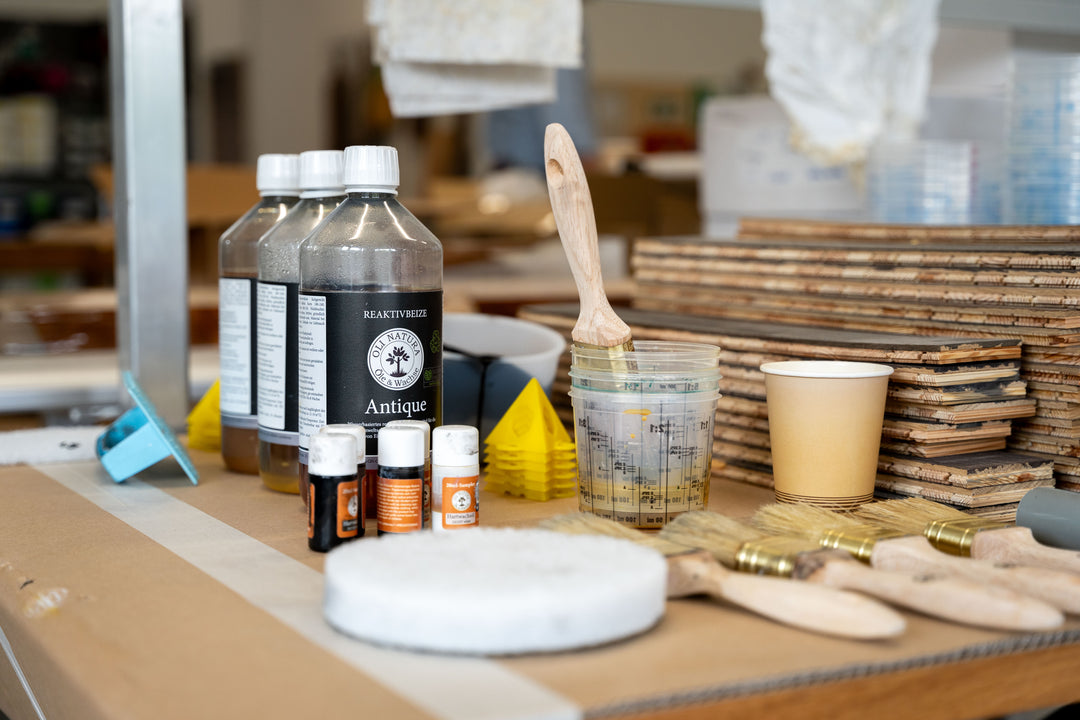
Reactive stains such as the VOC-free OLI-NATURA Antique
reactive stain react with the tannins in oak or walnut and produce
deep brown to deep gray shades. The surface is then oiled.
Two-tone effect
Textured surfaces
are built up in two colors. Typically, a colored base coat (e.g., white
or gray) remains in the pores, while the surface is treated with a
contrasting oil (e.g., black) to create depth. Typically
implemented with OLI-NATURA Colour hardwax oil.
What matters today:
Natural feel, matte appearance, sustainability, and reparability.
Efficiency in processing is crucial. Modern high-solid oils enable a finished
result in just one coat - instead of two or three. Systems such as the
OLI-NATURA HS Professional Oil represent this one-layer approach and can be processed flexibly
with or without hardener (10:1), depending on the application.
The color focus is also shifting: away from gray toward warm, natural shades of brown. This is complemented
by selectively used dark, semi-transparent black tones.
Conclusion:
Oil is now a design tool. What matters is the interplay between the product, processing, and material.